

The Confusion Inside the Box
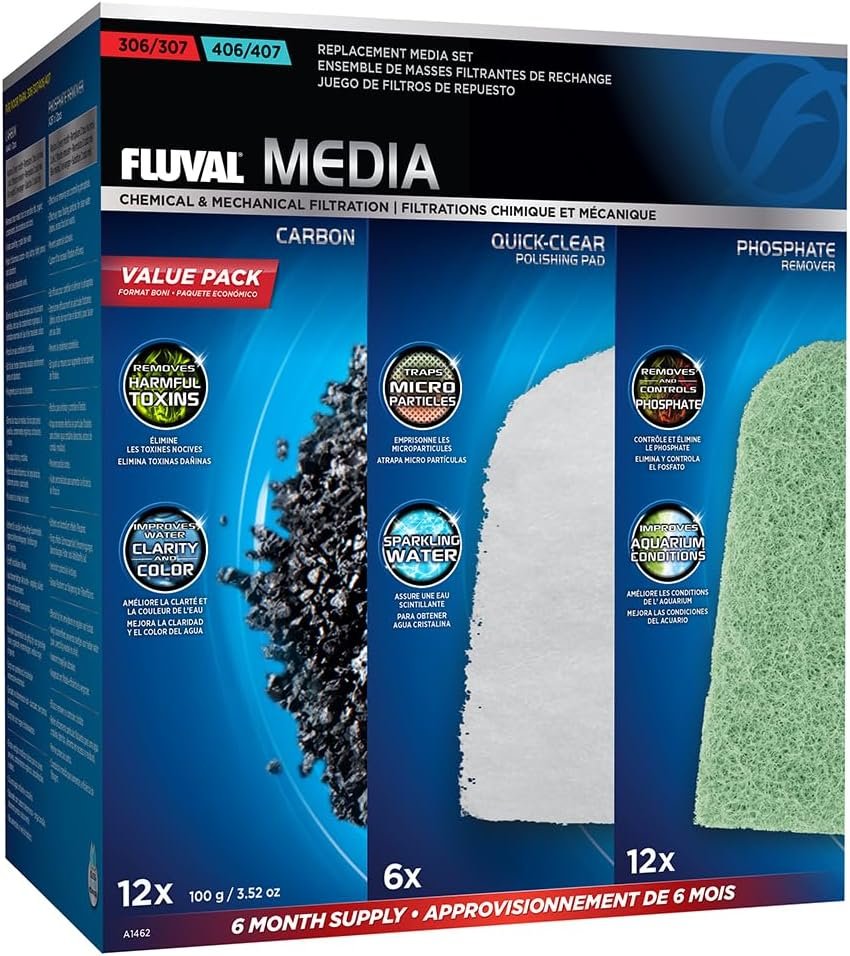
So, your brand new Fluval 307 or 407 has arrived. You open the canister, and you see a stack of plastic baskets, some white boxes of ceramic rings, and a few black sponges.
The instruction manual tells you where to put them, but here is a secret: The default manufacturer setup is just "good enough." It is not "optimized."
If you want water that looks like air—where your fish seem to be floating in space—you need to customize your media stack.
The Golden Rule: Follow the Flow
Before you drop anything into a basket, you must understand how water moves through your specific filter.
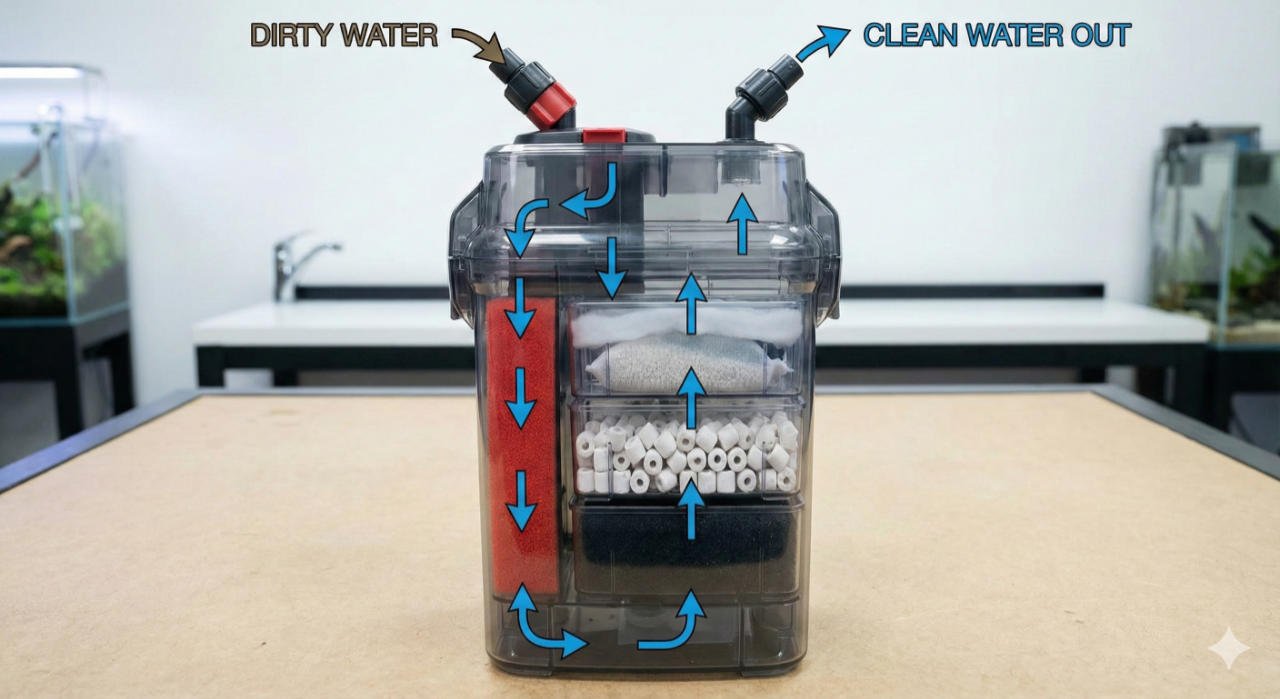
In the Fluval 07 series, the water follows a specific path:
-
In through the intake.
-
Down through the vertical red foam side-screen (the pre-filter).
-
Up from the very bottom basket to the top.
-
Out back into the tank.
Because the water flows UP through the baskets, we must load our media from Bottom to Top in order of coarseness.
Step 1: The Pre-Filter (The Side Chamber)
-
What goes here: The Vertical Foam Pads (included).
-
Why: This is your first line of defense. It catches the big stuff—dead leaves, uneaten food, and fish waste—before it clogs up your expensive bio-media.
-
Action: Leave the standard white/red coarse foams here. They are excellent.
Step 2: The Bottom Basket (Mechanical Filtration)
-
What goes here: Bio-Foam or Coarse Sponges.
-
The Goal: Scrub the water of medium-sized particles.
-
The Setup: The Fluval usually comes with a "Bio-Foam" pad here. If you have extra space in this basket, add a layer of standard aquarium wool or a medium-density sponge. You want to catch the debris that slipped past the side pre-filter.
Step 3: The Middle Basket (Biological Filtration)
-
What goes here: Ceramic Rings (Bio-Max), Sintered Glass, or Biohome Media.
-
The Goal: This is the engine room. This media houses the beneficial bacteria that convert toxic ammonia into safe nitrate.
-
The Setup:
-
Fill this basket to the brim.
-
PRO TIP: If you are upgrading from an old internal filter, squeeze your old dirty sponge over this new media. It looks gross, but it "seeds" the new filter with good bacteria instantly.
-
CRITICAL: Never wash this media in tap water. The chlorine will kill your bacteria. Only rinse it in old tank water during a water change.
-
Step 4: The Top Basket (Chemical & Polishing)
-
What goes here: Fine Polishing Pads + Chemical Media (Carbon or Purigen).
-
The Goal: The "Final Polish." This removes microscopic particles, odors, and tannins (the stuff that makes water look yellow).
-
The Setup:
-
Place a bag of Activated Carbon (good for odors) or Seachem Purigen (amazing for clarity) at the bottom of this basket.
-
Place a Fine Filter Floss pad on the very top. This is the last thing the water touches before returning to the tank.
-
Summary: The "Perfect Stack" Diagram
When to Clean It?
You don't need to open your canister every week. In a standard 200L-300L community tank, you only need to crack open the Fluval 07 series once every 2-3 months.
When the flow rate noticeably slows down, that is your sign that the bottom sponges or the top polishing pad are clogged. Rinse the sponges, replace the polishing pad, and you are good to go for another season.
[Link: Shop Filter Media & Sponges Here]